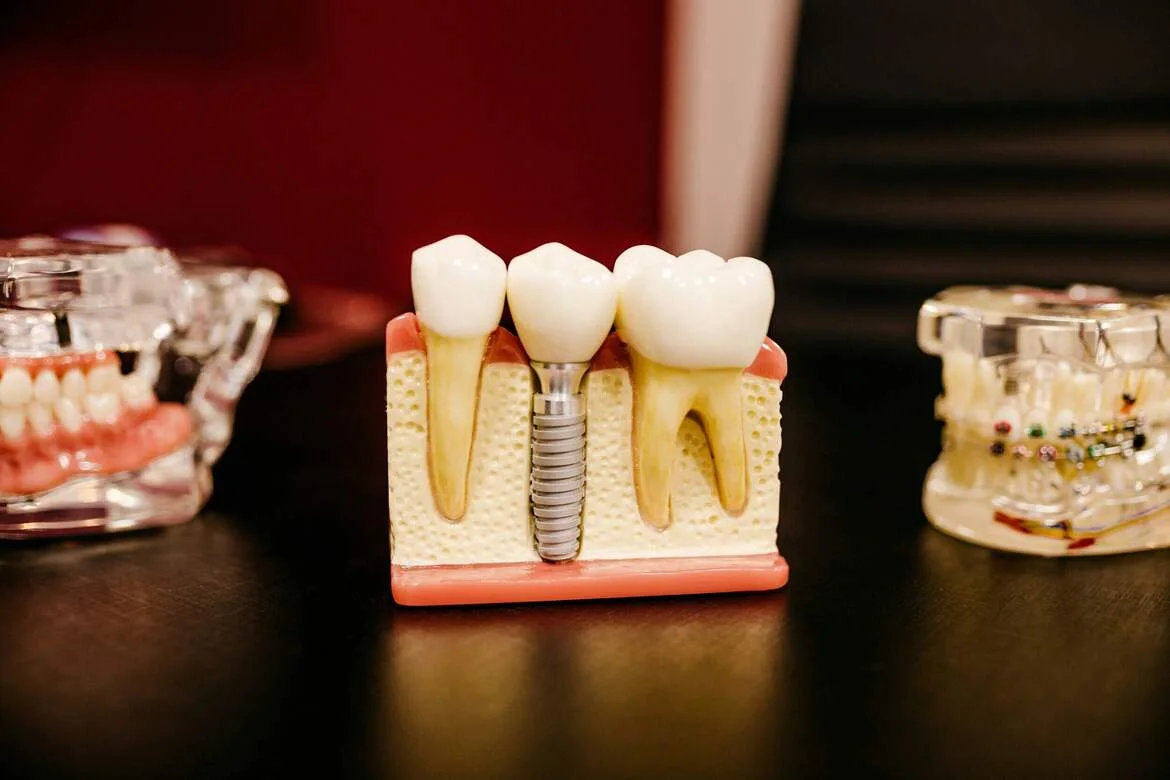
What are full-arch dental implants?
A full-arch restoration replaces all the teeth in one upper or lower jaw on several implants. All-on-4 and All-on-6 describe common approaches, not a diagnosis or a promise that it suits you. Temporary teeth and the final teeth are separate stages.
See the sources ↓Replacing all teeth in an upper or lower jaw
When all or most of the teeth in one jaw need replacing, a full-arch restoration uses a small number of implants, often four to six, to hold a complete row of teeth. Your dental team fixes it in place; you don't take it out at night.
That's the main difference from a removable denture. If you'd rather have something you can take out but that grips better than a regular denture, read about implant-supported dentures.
When full arch implants are considered
It comes up when someone has lost, or is about to lose, most or all of the teeth in one or both jaws. Common reasons:
- Decay affecting most of the teeth
- Advanced periodontal (gum) disease
- An injury that took out several teeth
- Older dental work that has worn out or failed
How full arch implants work
Several implants are placed at planned positions in the jaw. "All-on-4" and "All-on-6" simply mean four or six implants holding the arch. Maló and colleagues described the All-on-4 approach in 2003 as an immediate-function concept for the fully toothless lower jaw.
How many implants you need, and where, depends on how much bone you have, its quality, and where your bite puts force. Sometimes the back implants are angled to reach better bone and avoid areas where it's thin.
After placement and healing, the final set of teeth is attached to the implants.
Comparison to traditional dentures
A conventional denture rests on the gums and is held by suction or adhesive. As the jawbone changes shape over the years, the fit loosens, and the denture can move, rub or make eating and speaking harder.
A full-arch restoration is held by implants in the bone, so it moves much less. For many people that changes how comfortable eating and speaking feel. The trade-offs are surgery, a longer treatment and more involved cleaning. Our page on implants vs bridges vs dentures sets the options side by side.
Bone planning and preparation
Full-arch planning starts with a close look at the bone. The assessment usually covers:
- 3D imaging to measure bone volume and structure (see what a CBCT scan shows)
- Where the nerves run and how close the sinuses are
- How bite forces will be spread across the implants
- Any areas where bone grafting could help
If the bone is thin in places, grafting or other preparatory work may come first.
Treatment timeline
The stages are planning, implant placement, healing, then attaching the final teeth. How long that takes depends on:
- Whether grafting or extractions are needed first
- How long the implants take to integrate with the bone
- How complex the final teeth are to make
- How you heal
Many people wear a temporary set of teeth while they heal, so they aren't without teeth while the final set is made. For what the weeks after surgery feel like, see the healing and recovery timeline.
Temporary teeth and immediate loading
Immediate loading, sometimes called “teeth in a day”, means attaching teeth soon after surgery. It's an option only for selected cases depending on bone, implant stability, and health. Temporary teeth are used first; final teeth are fitted after healing. Other patients need to heal before any teeth can be attached (Esposito 2013).
Longevity and maintenance
Implants that integrate well can stay in function for many years with good care, though results vary from person to person. The teeth on top wear with use and may need adjusting and, eventually, replacing.
Looking after a full arch means:
- Daily cleaning with the tools your dental team shows you, including under the bridge
- Regular professional cleanings and check-ups
- Periodic checks of the teeth for fit and wear
- Looking after your general health, which affects how the tissue around implants holds up
Is full arch treatment right for everyone?
No. Uncontrolled health conditions, bone that can't be built up, and smoking can each count against it. A dentist weighs your medical history, bone and goals before suggesting it. The overview of types of dental implants shows the other designs that might be offered instead.
Full-arch quotes have many parts, from extractions and temporaries to the final teeth. Our guide on how to compare dental implant quotes helps you check each stage is listed.
Questions about your own situation?
A full-arch assessment can help clarify the support, cleaning, and healing a proposed design would need.
ImplantOptions.ca is published by Smile Studio Dental, a dental office in Markham. If you'd like to talk through what you've read with a dentist, you can request a consultation. You're also welcome to bring these questions to your own dentist.
References
- Malo P, Rangert B, Nobre M. "All-on-Four" immediate-function concept with Brånemark System implants for completely edentulous mandibles: a retrospective clinical study. Clin Implant Dent Relat Res. 2003;5(Suppl 1):2-9.
- Adell R, Lekholm U, Rockler B, Brånemark PI. A 15-year study of osseointegrated implants in the treatment of the edentulous jaw. Int J Oral Surg. 1981;10(6):387-416.
- Esposito M, Grusovin MG, Maghaireh H, Worthington HV. Interventions for replacing missing teeth: different times for loading dental implants. Cochrane Database Syst Rev. 2013;(3):CD003878.
- Canadian Dental Association: dental implants
A useful next question.
“Will my proposed full-arch teeth be fixed or removable, temporary or final?”
See my consultation questions ↗