What are the main implant treatment options?
The main choices are a single crown, an implant-supported bridge, fixed full-arch teeth, and a removable denture that attaches to implants. The implant material, number of posts and attachment method are separate decisions made during planning.
See the sources ↓Start with the gap you’re exploring.
The main implant options
There are four main ways to use implants: a single crown, an implant-supported bridge, a fixed full-arch set of teeth, and a denture that clips onto implants. Which one fits depends mostly on how many teeth are missing and where. If you're starting from scratch, read what dental implants are and how they work first.
The Canadian Dental Association also has a plain overview of how implants work and what treatment involves.
Why there are different types
Two people missing the same number of teeth can still be offered different designs. The plan is shaped by:
- How many teeth are missing, and whether the gaps are together or spread out
- How much jawbone there is, and its quality
- Where the biting forces fall
- How visible the area is, and what you want it to look like
- The health of the teeth you still have
Single tooth dental implants
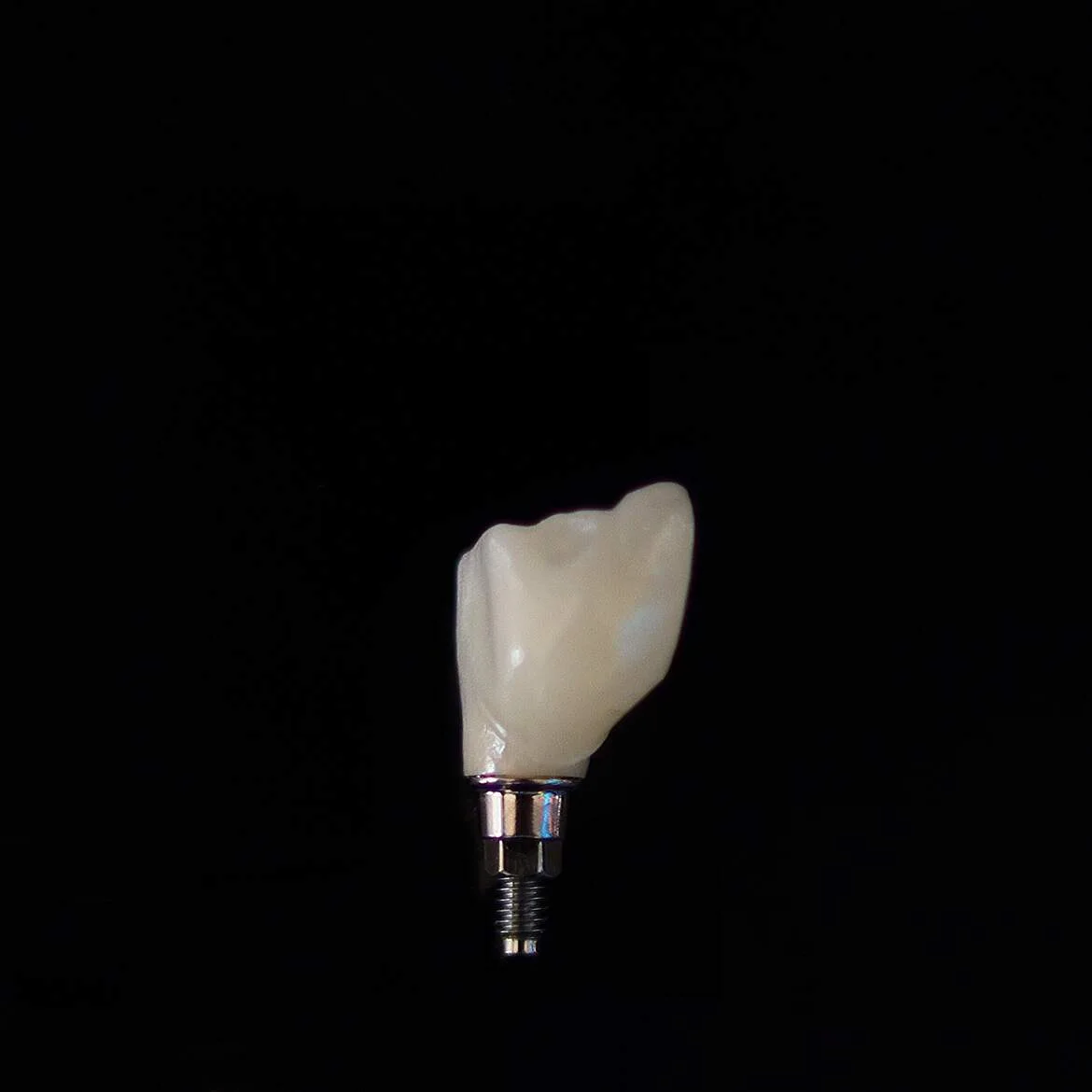
A single tooth implant replaces one missing tooth on its own. The implant goes into the jawbone and, after healing, a crown is attached to it. The neighbouring teeth aren't involved.
It's usually considered when the teeth on either side are healthy and don't need crowns themselves.
Multiple tooth dental implants
When several teeth in a row are missing, multiple tooth implants can hold a fixed bridge. You don't always need one implant per tooth: two implants can carry a bridge that spans three or four teeth, for example.
A bridge on implants may use fewer implants than separate crowns would. Cost, suitability and upkeep depend on the design proposed.
Full arch dental implants
Full arch implant treatment, often called All-on-4 or All-on-6, is for people who have lost all or most of the teeth in one jaw. A set number of implants holds a complete row of replacement teeth.
Unlike a conventional denture, the teeth are fixed to implants in the bone, so they stay put when you eat and talk.
Implant-supported dentures
Implant-supported dentures are dentures that attach to implants instead of resting only on the gums. For people whose regular denture slips or rubs, that attachment can reduce movement and sore spots.
Some designs you take out yourself for cleaning. Others are fixed and only your dental team removes them.
Immediate vs delayed placement
Sometimes an implant goes in the same day a tooth is taken out. In other cases the socket is left to heal first so the bone and gum can recover.
The dentist decides based on the bone at the site, whether there's infection, and what the final restoration needs to be.
Implant materials
Most implants are made from one of two materials:
- Titanium. The most widely used, with a clinical history going back to the original osseointegration research of the 1960s and 1970s. Bone bonds well to it.
- Zirconia. A metal-free ceramic. It may be considered for people with metal sensitivities or particular aesthetic concerns, though titanium has the longer evidence base.
Both have been shown to work clinically. Ask your dentist why they're proposing one over the other in your case.
Professional consultation required
A dentist needs to examine you before any of these options can be matched to your mouth. Bone density, gum health, medical history and your own goals all feed into the plan.
This page is a general overview, not a treatment plan. When you're comparing proposals, our guide on how to compare dental implant quotes shows what to check line by line.
Questions about your own situation?
The type of replacement teeth you need is one part of choosing an implant plan.
ImplantOptions.ca is published by Smile Studio Dental, a dental office in Markham. If you'd like to talk through what you've read with a dentist, you can request a consultation. You're also welcome to bring these questions to your own dentist.
References
- Buser D, Sennerby L, De Bruyn H. Modern implant dentistry based on osseointegration: 50 years of progress, current trends and open questions. Periodontol 2000. 2017;73(1):7-21.
- Wennerberg A, Albrektsson T. Effects of titanium surface topography on bone integration: a systematic review. Clin Oral Implants Res. 2009;20(Suppl 4):172-184.
- Osman RB, Swain MV. A critical review of dental implant materials with an emphasis on titanium versus zirconia. Materials (Basel). 2015;8(3):932-958.
- Esposito M, Grusovin MG, Maghaireh H, Worthington HV. Interventions for replacing missing teeth: different times for loading dental implants. Cochrane Database Syst Rev. 2013;(3):CD003878.
- Malo P, Rangert B, Nobre M. "All-on-Four" immediate-function concept with Brånemark System implants for completely edentulous mandibles: a retrospective clinical study. Clin Implant Dent Relat Res. 2003;5(Suppl 1):2-9.
- Canadian Dental Association: dental implants
A useful next question.
“Which restoration designs should I compare before deciding?”
See my consultation questions ↗