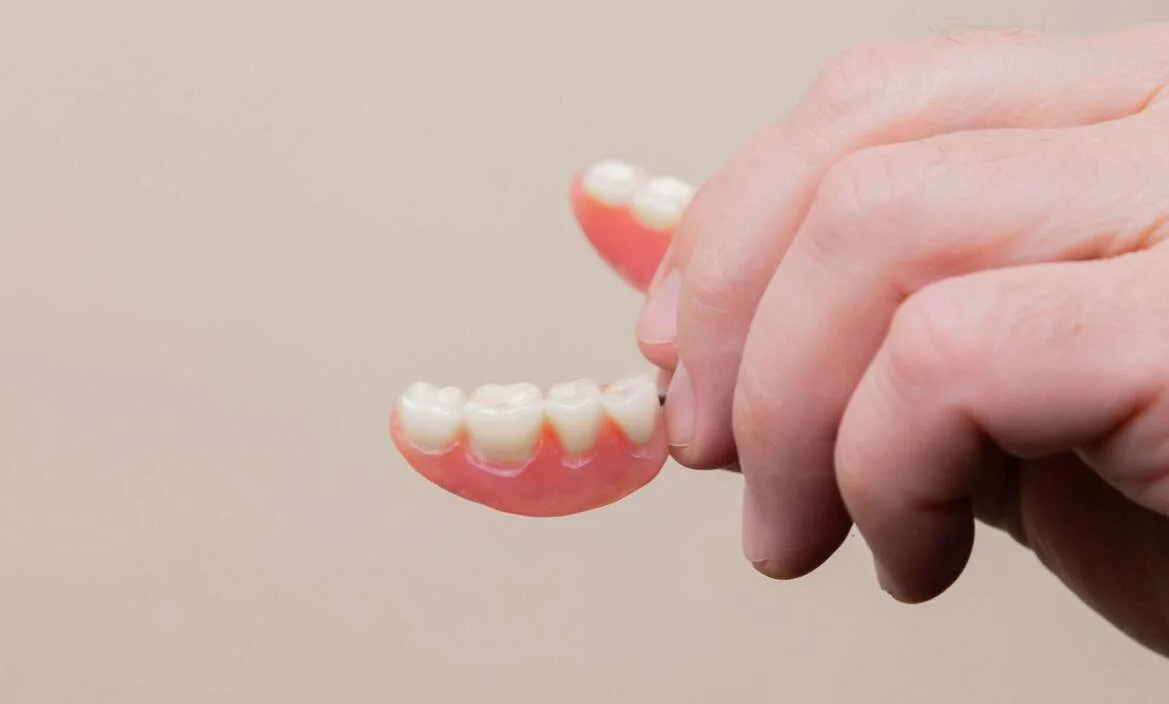
Are implant dentures removable?
Some implant dentures you take out yourself; fixed full-arch designs are removed only by your dental team. Ask which design is proposed, how you clean it, and which attachments will need maintenance.
See the sources ↓Improving denture stability with implant support
An implant-supported denture clips or screws onto implants in the jaw, so it moves far less than a denture held by suction or adhesive. It's still a denture: a full row of teeth on a base. The difference is what holds it.
People usually ask about it when a regular denture slips, rubs or makes eating hard.
When implant-supported dentures may be considered
It's an option when all the teeth in one or both jaws are missing and a conventional denture isn't staying put or comfortable. That happens when:
- The denture moves or slips when you eat or talk
- The jawbone has changed shape and the denture no longer fits well
- You want a denture that feels more secure
- Your bone or preferences make a fixed full-arch bridge less suitable
Fixed vs removable options
The first question to ask is who takes it out:
- Removable (overdenture). You take it out yourself for daily cleaning. It snaps onto attachments on the implants and clicks back in.
- Fixed. It's secured to the implants and only your dental team can remove it. It stays in all the time, and you clean it in your mouth, more like natural teeth.
Which suits you depends on your health, how easily you can handle small cleaning tools, how you'd like to clean it, and what you want from treatment. Ask your dentist to explain why they lean one way.
How implant-supported dentures work
Implants are placed in the jaw as anchor points. After they've integrated with the bone, the denture is connected to them.
A removable denture usually snaps onto attachments on the implants. A fixed one is screwed or cemented onto the abutments. Either way, the implants carry some of the load and cut down how much the denture moves.
Bone, planning, and preparation
The implants need enough bone and healthy gum around them. Before treatment, a dentist checks:
- Bone density and volume in the jaw
- The condition of the gums
- Where nerves and other structures sit
- Your general health and anything that affects healing
If there isn't enough bone, grafting or other preparatory work may be suggested first.
Compared to traditional dentures
A complete denture rests on the gums; a partial denture may also hook onto remaining teeth. Over time the bone underneath changes shape, the fit loosens, and the denture moves more. That's when eating and speaking get harder.
Anchoring the denture to implants addresses much of that. Compared with a conventional denture, people can expect:
- Less movement when eating and speaking
- Better retention, so it stays in place
- Less need, or none, for denture adhesive
For a toothless lower jaw specifically, the McGill consensus statement named a two-implant overdenture, rather than a conventional denture, as the first-choice standard of care.
Longevity and ongoing care
With good care, the implants can stay in function for many years, though results vary. The denture parts wear: clips and attachments need replacing from time to time, and the denture itself may need adjusting, repair or eventual replacement.
Ongoing care includes:
- Cleaning the denture and the area around the implants every day
- Regular check-ups and professional cleanings
- Periodic checks of the attachments and the fit
- Replacing worn parts as they wear
Is this option right for everyone?
No. It depends on your bone, medical history, gum health and preferences, and some conditions affect healing or make placing implants harder. The guide on who is not a candidate for dental implants covers the common reasons for waiting.
A consultation is where the options get matched to your mouth. Our guide on full arch dental implants describes the fixed alternative. When you bring questions, the consultation question builder can help you ask who removes the denture and how you'll clean it.
Questions about your own situation?
Ask how a proposed denture attaches, who removes it, and how you would clean it.
ImplantOptions.ca is published by Smile Studio Dental, a dental office in Markham. If you'd like to talk through what you've read with a dentist, you can request a consultation. You're also welcome to bring these questions to your own dentist.
References
- Feine JS, Carlsson GE, Awad MA, et al. The McGill consensus statement on overdentures: mandibular two-implant overdentures as first choice standard of care for edentulous patients. Int J Oral Maxillofac Implants. 2002;17(4):601-602.
- Adell R, Lekholm U, Rockler B, Brånemark PI. A 15-year study of osseointegrated implants in the treatment of the edentulous jaw. Int J Oral Surg. 1981;10(6):387-416.
- Esposito M, Grusovin MG, Maghaireh H, Worthington HV. Interventions for replacing missing teeth: different times for loading dental implants. Cochrane Database Syst Rev. 2013;(3):CD003878.
- Canadian Dental Association: dental implants
A useful next question.
“Who removes my restoration, and how will I clean underneath it?”
See my consultation questions ↗